

Ocean Camel™ — Composite Floating Camel
Navy Products
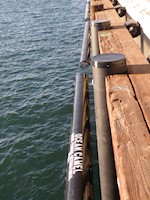
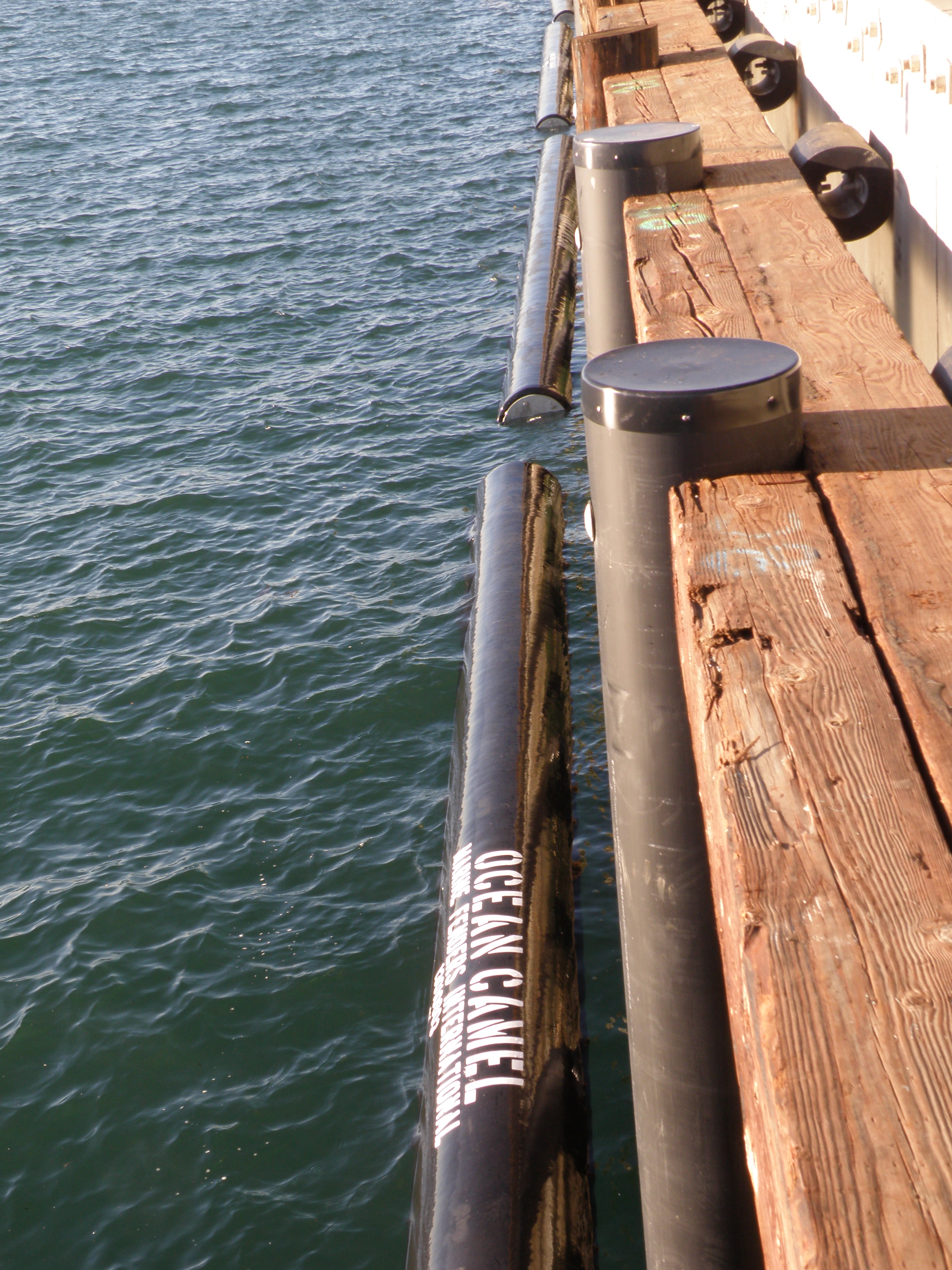
- Construction: Composite floating camels constructed from reinforced plastic timbers, ultra-high-strength steel pipe, or seal-welded tubular steel, depending on application — providing a positive-buoyancy standoff between vessels and piers.
- Foam core: All sealed chambers 100% filled with closed-cell urethane flotation foam — not internal water ballast — ensuring the camel stays afloat and functional even under sustained load.
- Skin/wear surface: Thick, tough, abrasion-resistant non-marking urethane wear surface protects vessel hulls while distributing berthing loads across multiple pier pilings.
- End fittings: Available with dual hawse pipes or integral swivel end fittings, depending on camel design and application.
- Deck & features: Non-slip decking, optional deck fittings, custom colors, and additional buoyancy modules available across all designs.
- Compliance: Constructed to current US Navy specifications for commercial and military berthing applications.
Camel Variants:
- LC — Camel Logs: Composite cylindrical floating camels available in two core types — ultra-high-strength steel pipe (urethane foam-filled, with dual hawse pipes or swivel end fittings) or plastic pipe (urethane foam-filled, dual hawse pipes).
- CPC — Composite Plastic Camels: Barge-type floating camels built from reinforced plastic timbers with closed-cell buoyancy modules, offered in numerous designs and configurations.
- SSC — Surface Ship Camel: Sealed tubular steel design berthing CH and DDG class surface vessels, with 100% closed-cell foam fill, non-marking grey fenders, anti-fouling coating, 316 stainless steel hardware, and a 10 ft × 40 ft composite decking working platform.
- DDC — Deep Draft Camel: Available in two configurations — the DDC-FA (lightweight, seal-welded tubular steel, open-bottom pipes, vertically positioned submarine side fenders, narrow berthing footprint) for fast-attack submarines, and the DDC-AC (wide-body design with a large composite working platform) for all submarine classes.
